
Commercial Roof Installation in Brooklyn, NY and the Surrounding Areas
Professional Commercial Roof Installation Services in Brooklyn, New York
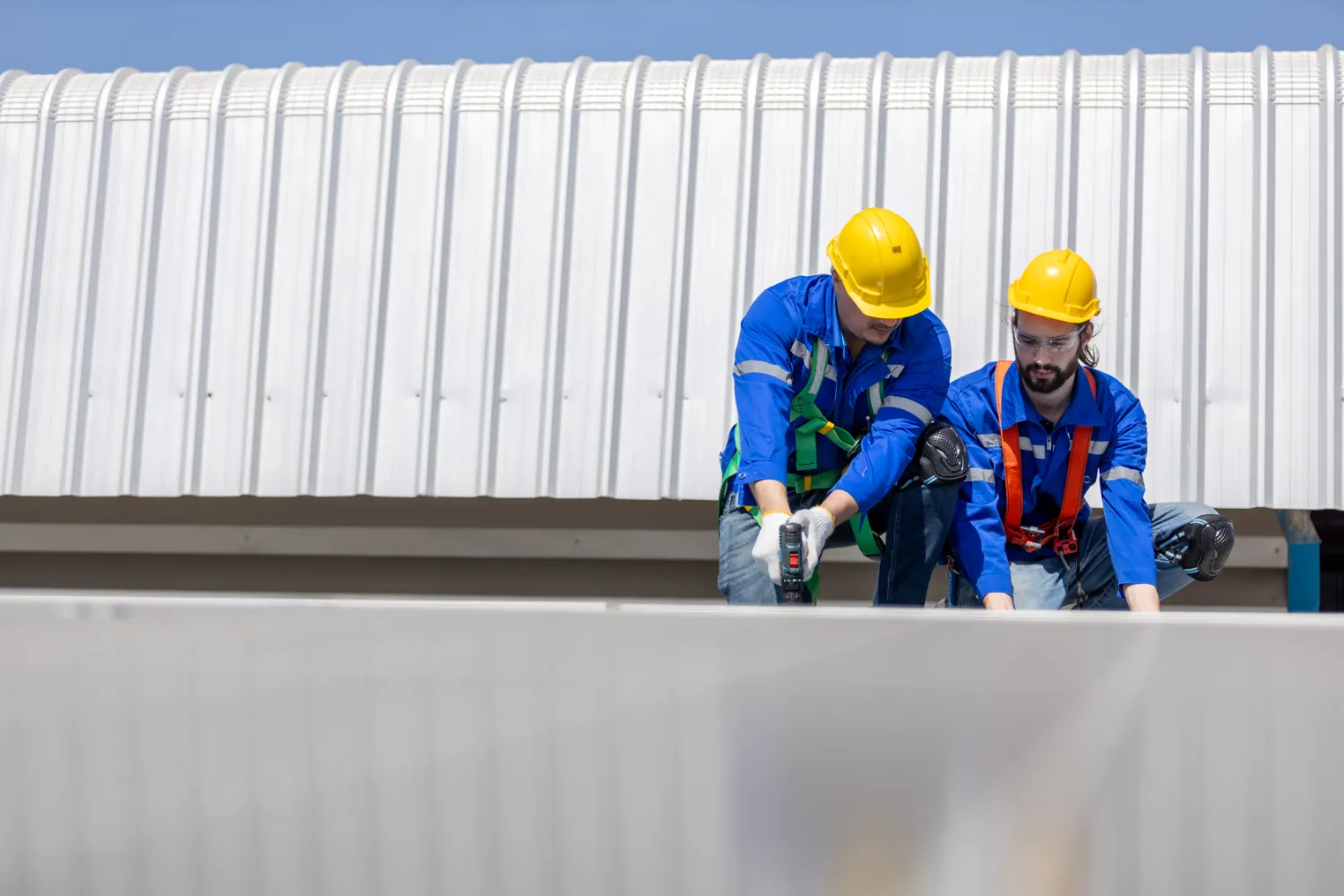
Why Choose Professional Commercial Roof Installation?
The scale and complexity of commercial roofing elevate it far beyond the residential realm. A building’s efficiency, integrity, and operational health are intrinsically tied to the quality of its overhead shield. Professional installation is paramount because it directly impacts building efficiency and integrity, ensuring the tight, energy-efficient seal required to meet modern standards and mitigate skyrocketing utility costs. Furthermore, experienced contractors manage the immense liability and regulatory exposure inherent in high-altitude, urban construction projects, safeguarding your business from catastrophic error and financial risk. In this environment, expertise is the only warranty that truly matters.
Types of Commercial Roofing Systems
Flat and low-sloped roofs dominate Brooklyn’s commercial architecture, making single-ply membranes the dominant players.
TPO (Thermoplastic Polyolefin) Roofing: The current darling of energy efficiency. Typically installed in bright, reflective colors, TPO excels at reducing the building’s cooling load by bouncing UV rays back into the atmosphere. Its seams are heat-welded, creating a monolithic, highly durable, and waterproof bond that performs exceptionally well in the city’s high-traffic conditions. TPO is generally favored for its energy-saving profile and robust seam strength.
EPDM (Ethylene Propylene Diene Monomer) Roofing: The long-proven veteran. This synthetic rubber membrane boasts an impressive lifespan, often exceeding 25–30 years, and offers superior flexibility, making it highly resistant to the constant expansion and contraction caused by Brooklyn’s temperature extremes. While typically black and less reflective than TPO, EPDM remains a cost-effective and remarkably durable choice.
PVC Roofing: This system offers outstanding resistance to grease, oil, and harsh chemicals, making it an excellent choice for commercial kitchens, manufacturing plants, and restaurants. Like TPO, PVC is heat-welded for exceptional seam integrity.
Modified Bitumen Roofing: A robust asphalt-based system often reinforced with polymers. Applied in overlapping layers, it provides a tough, multi-ply barrier suitable for roofs with minor slopes, offering great waterproofing and durability in harsh conditions.
Roof Coatings and Green Roofs: Coatings, often acrylic or silicone, are applied over existing systems to extend lifespan and improve reflectivity—a smart, short-term measure. Green Roofs, while complex, offer superior insulation, stormwater management, and a powerful statement of sustainability in the urban heat island.
The Commercial Roof Installation Process
A precise, multi-stage workflow is the hallmark of a professional Brooklyn commercial installation:
Step 1: Analysis and Inspection: This is the investigative phase. A thorough inspection determines the condition of the existing roof, the depth of necessary deck repair, and insulation requirements. Core samples may be taken to fully understand the roof assembly and inform the final material choice.
Step 2: Design and Planning: The most vital phase in NYC. This includes selecting the final system, generating architectural plans, calculating load specifications (especially for new equipment or insulation), and preparing all necessary documentation for the Department of Buildings filing.
Step 3: Removal and Substrate Repair: The old system is stripped down (full tear-offs are common for code compliance). The exposed roof deck and underlying structure are then inspected and repaired. Failure to create a perfect, level substrate at this stage guarantees premature membrane failure later.
Step 4: Installation and Final Inspection: The new membrane is installed, carefully managing all flashing, penetration points, and seam welding. This is followed by internal quality checks and the final mandated NYC DOB inspection to ensure the project meets all safety and regulatory compliance standards.
Step 5: Cleanup and Maintenance: The site is returned to pristine condition. The process concludes with a comprehensive warranty package and a detailed maintenance schedule designed to maximize the system’s lifespan.
Building Codes and Compliance
In Brooklyn, the NYC Department of Buildings (DOB) acts as the ultimate authority. Commercial roof installation almost universally requires a permit—particularly for full tear-offs, structural alterations, or changing the roofing membrane type.
Compliance means adhering to the strict 2022 Construction Codes and the Energy Conservation Code, which mandates certain levels of insulation and reflectivity. Your contractor must work with a Registered Architect (RA) or Professional Engineer (PE) to draw up the plans and file the appropriate Alteration Permits (Alt2 is common) through the DOB NOW system. Any work that impacts the building’s structural stability or egress will require a higher-level permit. A trustworthy contractor is a master navigator of this regulatory labyrinth, ensuring your project is legally sound and penalty-proof.
Why Brooklyn Businesses Trust Local Roofing Experts
Local experience is not a preference; it is a necessity. Brooklyn’s contractors navigate the unique operational constraints daily: the narrow streets, the limited staging space, the need for precision rigging, and the close proximity to neighbours. They understand the localized weather patterns and, crucially, the often-complex historical and zoning requirements that influence every NYC DOB filing. Choosing a local expert means selecting a partner who is fluent in the borough’s operational vernacular.
Request a Free Quote or Consultation
Don’t let your building’s most critical component deteriorate in silence. A strategic conversation is the first step toward securing your investment.
Contact our experts today for a comprehensive, no-obligation analysis of your commercial roofing needs. We will guide you through the materials, the codes, and the final price tag with the transparency only a true local authority can provide.